
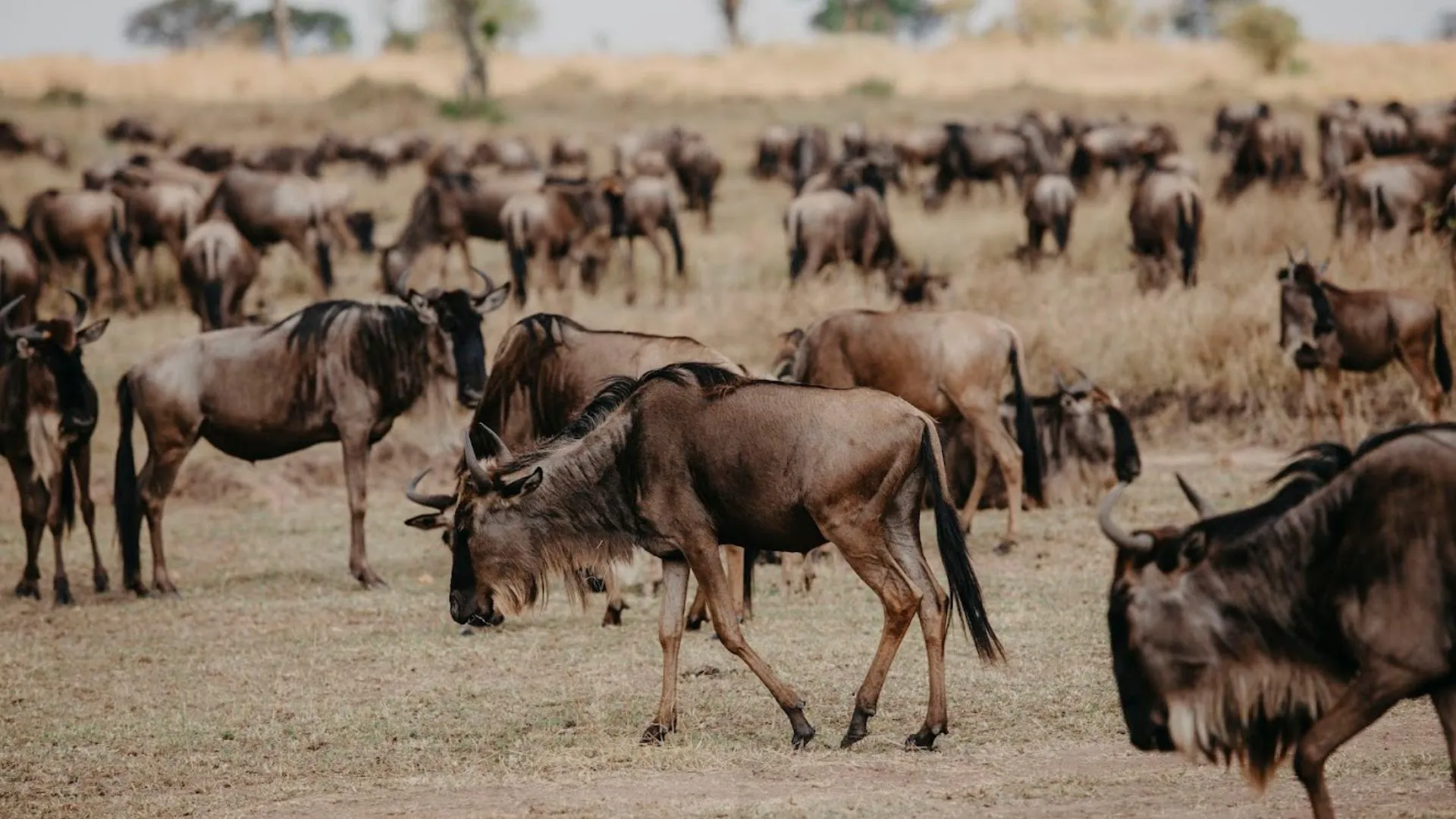
The Great Wildebeest Migration is widely celebrated as one of Earth’s most spectacular wildlife events. Every year, over a million wildebeest—accompanied by hundreds of thousands of zebras and gazelles—undertake a vast circular journey across the Serengeti‑Mara ecosystem in search of fresh grazing and water.
This natural phenomenon unfolds in dramatic stages throughout the year, making the Great Migration Serengeti and its surrounding regions the best place to see the Wildebeest Migration up close. For first-time safari travellers, the Great Migration Serengeti offers an unparalleled adventure, blending raw wildlife drama with Tanzania’s stunning landscapes. Kilimanjaro Heroes Adventures crafts Serengeti Wildebeest Migration Safari experiences tailored for newcomers, ensuring safety, comfort, and prime viewing.
Understanding the Migration Cycle
The Great Wildebeest Migration is a perpetual, never‑ending circle driven by seasonal rains and the search for fresh grasses. Unlike some wildlife events that occur on specific dates, the migration follows weather patterns, creating a predictable yet constantly shifting spectacle across the Serengeti ecosystem.
From December to March, the herds congregate in the Southern Serengeti and Ndutu area, where lush grasslands triggered by short rains create ideal conditions for birthing. This calving season is one of the most remarkable times to witness newborn wildebeest calves wobbling on their feet within moments of birth—a sight that draws predators like lions and cheetahs, adding intense drama to a safari experience.
As the seasons progress, the herds disperse northward. By April and May, they cross into the central plains and Western Corridor, near the Grumeti River, where smaller but dramatic river crossings occur.
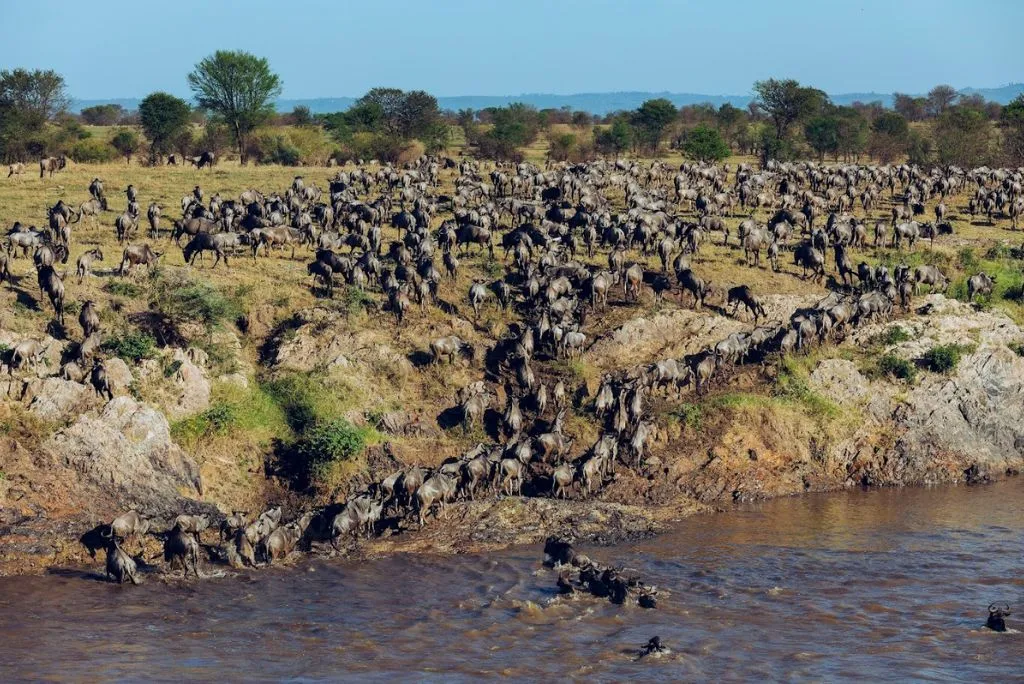
By June through October, the herds reach the northern stretches of the ecosystem. Here, at the banks of the Mara River, they undertake some of the most iconic and perilous crossings of all—a defining moment for those on a Serengeti Wildebeest Migration Safari. This section of the journey is often what images, documentaries, and wildlife documentaries capture as the classic migration experience.
Best Place to See Wildebeest Migration
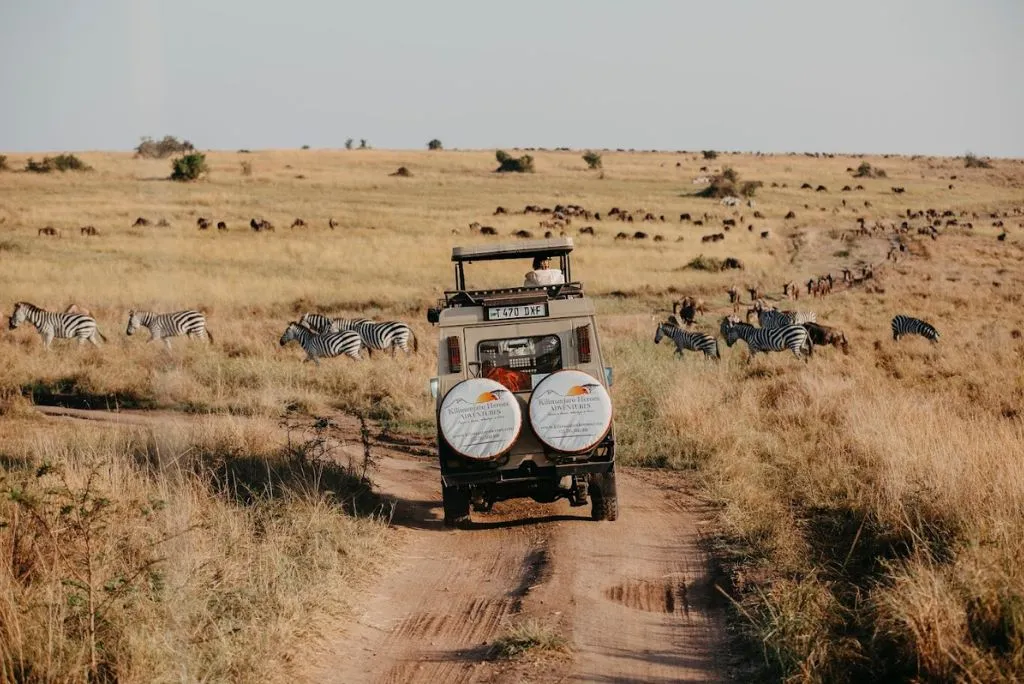
When it comes to choosing the Best Place to see the Wildebeest Migration, Tanzania’s Serengeti National Park stands unrivalled. Spanning over 14,750 square kilometres, the Serengeti offers viewing opportunities throughout the entire year — not just during the famous river crossings.
Key zones within the Serengeti
- Southern Serengeti & Ndutu (December – March): Calving season floods the plains with newborn wildebeest, attracting lions, cheetahs, and hyenas in spectacular numbers.
- Central Serengeti – Seronera (April – June): The herds consolidate as they rest and graze before the long northern push.
- Northern Serengeti – Kogatende & Lamai (July – October): The legendary Mara River crossings happen here — arguably the most thrilling wildlife event on the planet.
- Western Corridor – Grumeti (May – July): A quieter but equally dramatic crossing point, where giant Nile crocodiles lurk in the Grumeti River
Great Migration Serengeti: Month-by-Month Overview
Understanding the seasonal movement of the Great Migration Serengeti cycle helps you plan the safari experience that matches your personal wildlife Wishlist.
- January – March | Calving Season: The southern Serengeti and Ndutu region come alive with thousands of wildebeest giving birth. Up to 8,000 calves are born each day — a vulnerable, poignant, and dramatic spectacle that attracts the Serengeti’s big predators.
- April – May | The Long Rains: The herds begin their westward and northward journey. While rains can make roads muddy, the landscape is lush and green — beautiful for photography.
- June – July | Western Corridor & Grumeti Crossings: The migration passes through the western Serengeti, providing the first dramatic river crossing experiences of the year.
- August – October | Northern Serengeti River Crossings: Peak season for the legendary Mara River crossings. Thousands of wildebeest gather nervously on riverbanks before plunging into crocodile-filled waters in mass stampedes.
- November – December | The Return South: After grazing in the Masai Mara, the herds funnel back south to Tanzania, completing the ancient cycle.
Top Tips for First-Time Travellers

Book Early: The most popular lodges near the Mara River and Ndutu often book out 8–12 months in advance.
Choose a Mobile Camp: Kilimanjaro Heroes Adventures often recommends “mobile” camps that move seasonally to stay within reach of the herds.
Patience is Key: River crossings are unpredictable. You may wait for hours at the riverbank before a single “brave” wildebeest decides to take the plunge, sparking a mass exodus.
- Choose the Right Tour Operator – Partner with experts like Kilimanjaro Heroes Adventures for safe logistics and unforgettable safari experiences.
- Hire Knowledgeable Guides – Guides familiar with migration patterns maximize wildlife sightings and interpret animal behaviour effectively.
- Plan for Multiple Nights – Staying several nights near migration hotspots increases chances of seeing river crossings and predator action.
- Select Strategic Accommodations – Opt for lodges or mobile tented camps in Ndutu, Seronera, or Kogatende depending on the season.
- Understand Seasonal Changes – The Serengeti’s landscape shifts from dry savannah to lush grasslands, affecting wildlife movement and photography opportunities.
- Pack Essential Gear – Bring binoculars, a quality camera, and lightweight layers for early mornings and cooler nights.
- Stay Flexible – Wildlife behaviour and migration patterns can change daily, so be ready to adapt plans for the best experiences
Your Migration Adventure Starts Here
The Serengeti Migration is not just a wildlife event — it is a reminder of nature’s raw, magnificent power, and humanity’s privilege to witness it. Whether you’re drawn by the thundering river crossings of the northern Serengeti or the tender calving season on the southern plains, there has never been a better time to make this dream a reality.
[related_blogs]
Comment (0)