
Packing list for Kilimanjaro is one of the most important steps on the way to a successful climb. You will find online number of recommendations, however, most of them are not essential.
Continue reading
Packing list for Kilimanjaro is one of the most important steps on the way to a successful climb. You will find online number of recommendations, however, most of them are not essential.
Continue reading
Packing list for Kilimanjaro is one of the most important steps on the way to a successful climb. You will find online number of recommendations, however, most of them are not essential.
Continue reading
Packing list for Kilimanjaro is one of the most important steps on the way to a successful climb. You will find online number of recommendations, however, most of them are not essential.
Continue reading
Packing list for Kilimanjaro is one of the most important steps on the way to a successful climb. You will find online number of recommendations, however, most of them are not essential.
Continue reading
LUXEMBOURG/THIONVILLE – Salarié de la finance à Luxembourg, Matthieu a accompagné son ami Abdellatif, non-voyant, au sommet du Kilimandjaro. Une expérience hors du commun qu’ils racontent.
D’un bureau de la place financière au sommet de la plus haute montagne d’Afrique: c’est le chemin parcouru en fin d’année 2022 par Matthieu, 34 ans, et son ami non-voyant, Abdellatif, 58 ans. Ostéopathe dans la région de Thionville et aveugle depuis l’âge de 18 ans, Abdellatif rêvait de réaliser l’ascension du Kilimandjaro, le plus haut sommet du continent africain (5895 mètres). Un projet qu’il évoquait déjà avec Matthieu, son jeune patient, avec qui il s’est lié d’amitié.
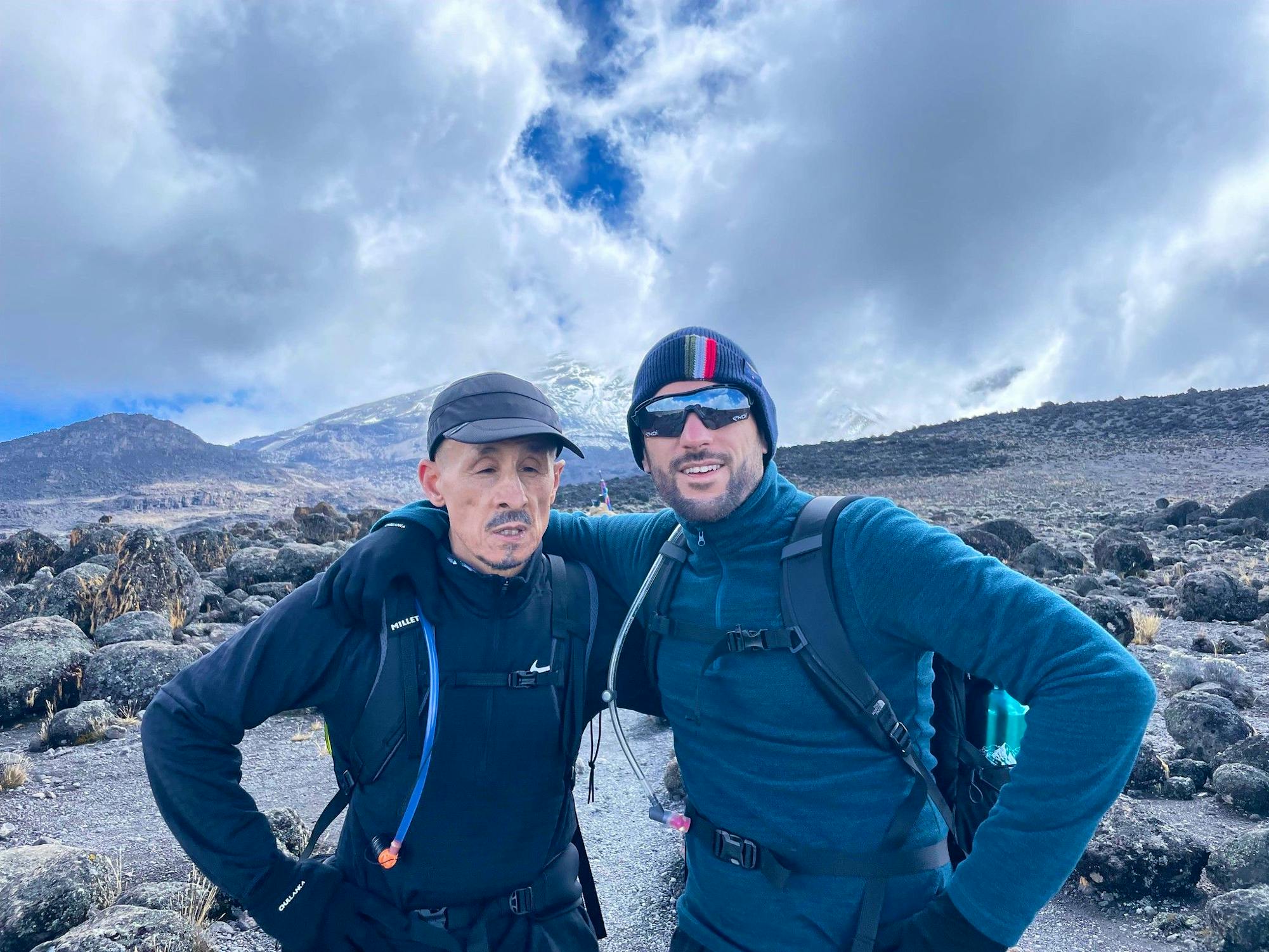
Arrivés au pied du mythique volcan, leur tentative attire l’intérêt de la presse locale. «Ils nous ont dit qu’ils n’avaient jamais vu un non-voyant s’attaquer au Kilimandjaro, en six jours», explique le duo. Tout au long de l’ascension, Matthieu devance son ami Abdellatif, qui s’appuie sur ses indications sonores, sa voix, le bruit de ses chaussures, et qui s’accroche à l’arrière de son sac à dos.
«Abdel a fait preuve d’une force mentale incroyable» raconte Matthieu. Ce dernier épate tout son monde, au moment de gravir l’impressionnant mur de Barranco, une paroi rocheuse de plus de 100 mètres de haut, sous les yeux ébahis de leurs guides. «Il a dépassé plusieurs groupes de personnes valides. Les guides n’avaient jamais vu ça», ajoute Matthieu, admiratif. «Je me suis éclaté sur cette partie. L’un de mes moments préférés», sourit Abdellatif.
Six jours après le début de l’aventure, après avoir expérimenté le mal aigu des montagnes à partir de 4 000 m d’altitude, traduit par des migraines, des difficultés respiratoires et une perte d’appétit, le duo entouré de l’équipe d’expédition, arrive au Uhuru Peak, et pose pour la traditionnelle photo souvenir.
«Cette ascension est une aventure extraordinaire, difficile à décrire. Mais elle est loin d’être une promenade de santé», lance Abdellatif. Forts de leur expérience réussie et après avoir déjà repoussé leurs limites, les deux hommes ont un nouvel objectif d’une autre envergure: s’attaquer à l’Aconcagua (Argentine), le toit de l’Amérique.

Who: Dr. Laura King, PhD, 48. Johnsburg, IL
Oura Tip: Understanding your Readiness Score and how it correlates to the way you feel can help you make better choices about whether to push through or give your body a break. “This has been very important to my overall health and has helped me improve my HRV and my resting heart rate,” King says.
Recently retired, Dr. Laura King, PhD, served as the Chief of Police for the McHenry County Conservation District Police Department in Illinois for five years, and as a police officer for 28 years in total. King earned her doctorate of philosophy and her master’s degree in psychology at Capella University and uses her formal education to inform and improve law enforcement operations. She also travels the country speaking on matters of mental wellness, psychological resilience, and physical fitness in law enforcement.
What led you to Oura?
During the Covid pandemic, I purchased Oura Ring for myself and then for the rest of my team at work. I bought it so we could track temperature trend fluctuations [which can signify that the body is under strain from stress or sickness]. As law enforcement officers, we needed to continue working, so I wanted to ensure I was doing something to protect myself and others.
Since then, Oura has helped me realize how my choices impact my health and the way I feel. I now use Oura for total health optimization, and most recently, used Oura to help inform my experience training for and climbing Mt. Kilimanjaro in Africa with my family.
What made you decide to purchase rings for your team?
As Chief of Police, it was my responsibility to ensure we were being proactive during the pandemic. For example, after using Oura to detect early signs of COVID-19 symptoms, two team members did not come to work — that prevented others from getting sick, which was very useful.
Additionally, physical fitness and mental wellness are very important for police officers. We have to be in a good headspace at work; we don’t want to be irritable with the public. The effects of sleep deprivation and not taking care of our health have serious consequences.
What other benefits did you notice among your workforce?
Many officers on my team benefited from using Oura. One noticed that even a single beer increased his resting heart rate and lowered his Sleep Score for three days, so he stopped drinking. It motivated a few officers to go to the doctor and recommit to a daily workout routine. Overall, the results were amazing.
In 2023, my department won the National Award for Officer Wellness, beating police agencies across the country. After the 12-month initiative, the officer productivity increased by 300%, and their non-scheduled sick time dropped by 67%. Using Oura was reported as one of the creative strategies that empowered officers to take control of their health.
I’m also the Head of the National Suicide Awareness for Law Enforcement organization and go around the country talking about how we can make the police profession more healthy to better serve our communities. Oura often comes up in conversation.
How did you use Oura to train for your Mt. Kilimanjaro hike?
My family and I had been training for months — going to CrossFit, using oxygen deprivation masks, doing interval hill rides on Peloton, hiking with weighted backpacks, and going alcohol-free.
The training regime was tough. It’s very easy to make excuses for exercise, especially when you are pushing yourself more than normal. But my Oura data helped to keep me on track. For example, if I saw I had a low Readiness or Sleep Score, I’d ease up and prioritize recovery. If my scores were high, I knew I could push through — it was just a mental challenge, not a physical one.
Being responsive to my body’s needs in this way actually helped me improve my heart rate variability and resting heart rate.
I also started paying closer attention to my sleep and the habits that were impacting it — like alcohol consumption, meal timing, bedtime habits, and scheduling choices.
How was your experience climbing Mt. Kilimanjaro, and how did Oura play a role?
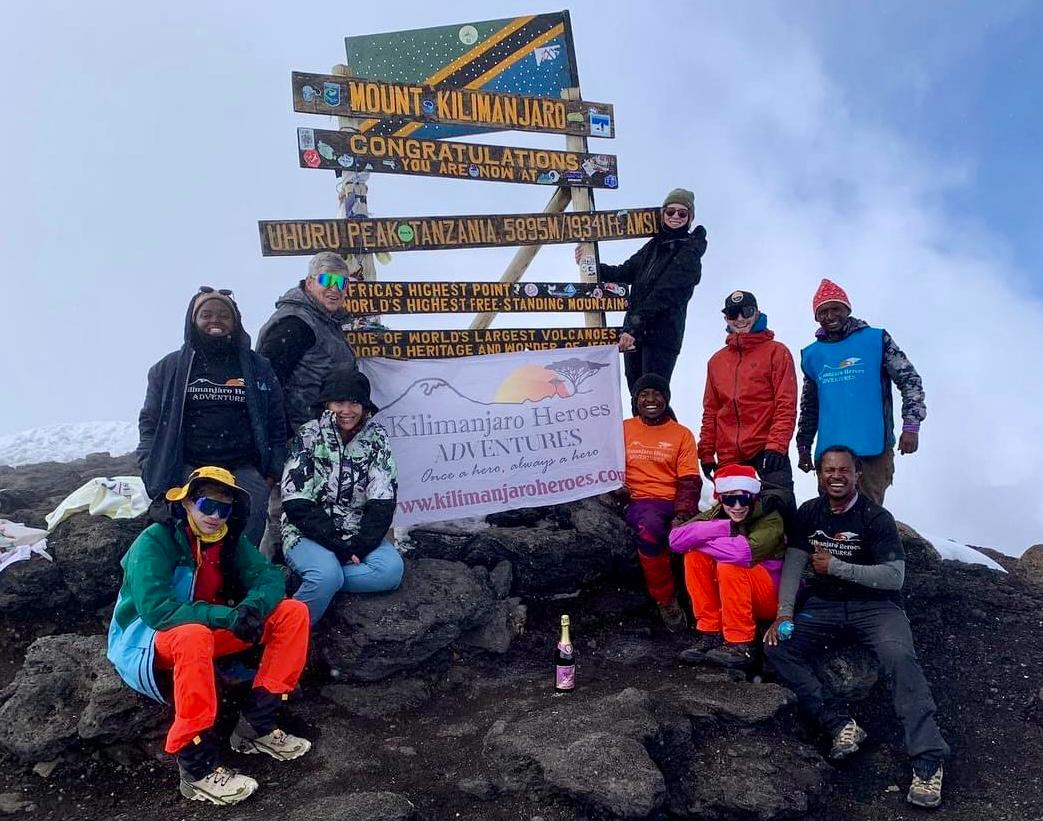
It was an 8-day summit during which we carried 30-lb backpacks, hiked up to 10 miles a day uphill, and slept on the mountain in a tent. It was a very challenging experience!
There were a couple of days on the mountain when I felt like I couldn’t go on, and my internal narrative was getting negative. The psychological challenges were harder than the physical ones! But having the Oura data was psychologically reassuring — I knew that my body was doing fine — it was just my mind I needed to overcome.
I believe that by using Oura in my training, I became very familiar with my body’s patterns. So after sleeping only three hours the first night, I expected to see a low Readiness Score. I knew it was because of compromised sleep, and that I’d be able to recover the next day. This helped me avoid the exhaustion or overwhelm getting to me.
On the expedition, I used Oura to monitor my resting heart rate and blood oxygen levels, which are two vital metrics as you ascend at high altitude. Oura gave me crucial information and insight that helped me understand my body’s response to the extreme conditions I was experiencing. This gave me peace of mind, knowing my body was okay.

As you embark on the journey to conquer Mount Kilimanjaro, it’s crucial to grasp the concept of altitude sickness and acclimatization. This article will break down these topics, providing insights into their effects and the measures to take for a safe and successful climb.
Mount Kilimanjaro, standing at a towering height of 5,895 meters (19,341 feet), presents unique challenges to climbers. Among these challenges, altitude sickness looms as one of the most perilous. An alarming number of individuals experience symptoms related to altitude sickness when ascending beyond 9,000 feet. At Climbing Kilimanjaro, ensuring your safety takes precedence.
Kilimanjaro is a favorite trek for many because it offers the opportunity to summit a high peak without requiring specialized climbing skills. This “walk-up” nature might mislead some into underestimating the potential dangers posed by altitude.
The summit of Kilimanjaro falls into the “extreme altitude” category, akin to Aconcagua and Denali. These peaks are surpassed only by “ultra” altitude peaks such as Everest and K2, where the acclimatization process becomes nearly impossible.
At Kilimanjaro’s summit, the oxygen available is approximately 49% less than at sea level. However, it’s not the oxygen percentage in the air that changes; rather, it’s the reduction in barometric pressure (air pressure) within the atmosphere.
In simpler terms, even though the oxygen percentage remains at 20.9%, its availability is diminished due to lower air pressure. This scarcity of oxygen molecules can lead to fluid accumulation around the brain (High Altitude Cerebral Edema) and the lungs (High Altitude Pulmonary Edema), which are severe conditions associated with reduced air pressure.
Altitude sickness comes in three primary forms: Acute Mountain Sickness (AMS), High Altitude Cerebral Edema (HACE), and High Altitude Pulmonary Edema (HAPE). AMS can manifest as mild, moderate, or severe, while HACE and HAPE entail more critical conditions.
Let’s delve deeper into these conditions.
AMS can affect anyone above 6,000 feet, as described by Dr. Peter Hackett. The initial sign is often a headache, which can also result from dehydration or overexertion. If other symptoms emerge, a diagnosis of AMS is likely.
HAPE arises from lung artery pressure elevation in low-oxygen environments, resulting in fluid accumulation around the lungs. Even climbers without severe AMS symptoms can develop HAPE.
Look out for:
HACE is a critical condition requiring immediate medical attention. Fluid buildup around the brain leads to confusion, lethargy, incoordination, and altered behavior.
Look out for:
Our guides use a pulse oximeter and consider your symptoms during daily health checks to evaluate your situation. The Lake Louise Scoring System aids diagnosis, assigning scores based on the severity of symptoms.
Acclimatization refers to the body’s adaptive processes in response to low-oxygen and low-atmospheric pressure environments. From day one, your body initiates changes to cope with altitude.
Changes you’ll experience:
As you ascend gradually, your body adopts mechanisms to adjust:
These adaptations occur gradually, and optimal acclimatization is achieved through routes with robust acclimatization protocols. Longer ascents allow your body ample time to adapt.
Prioritize your health, even beyond altitude sickness, by staying warm and practicing good hygiene.
Altitude training is growing in popularity among aspiring mountaineers and athletes. Various methods exist, such as simulated altitude chambers and intermittent hypoxic air exposure. While altitude training can improve acclimatization, pre-acclimatization through climbing other peaks or Mt. Meru can be equally effective.
Read more about training for Kilimanjaro.
Individuals with well-managed pre-existing medical conditions can successfully climb Kilimanjaro, but medical clearance is essential. Precautions are necessary, especially for heart, lung, or neurological conditions. Consult your doctor about medication adjustments and travel insurance coverage.
Altitude can disrupt sleep due to periodic breathing, a battle between the body’s oxygen sensors and carbon dioxide sensors. Adequate layers prevent hypothermia, while sunscreen and sunglasses shield against UV rays. Stomach issues are possible, making hygiene crucial.
Your safety is paramount. Our guides closely monitor your well-being, but your cooperation is essential. Inform your guide of any discomfort, and observe fellow climbers for unusual behavior. Regular health checks and the availability of oxygen and stretchers ensure your safety during the climb.
As you embark on this monumental journey, understanding altitude sickness and acclimatization equips you with the knowledge to safeguard your health and achieve a successful summit on Mount Kilimanjaro.

When it comes to climbing Mount Kilimanjaro, a common question arises: Is supplemental oxygen necessary for the climb? Let’s understand the role of oxygen and the challenges posed by altitude during this remarkable journey.
Altitude is a significant factor to consider when climbing Kilimanjaro. However, climbers do not require extra oxygen to reach the summit successfully. Instead, the “pole pole” method is employed – a gradual ascent to higher altitudes and sleeping at lower levels to acclimatize effectively.
Spending more time on the mountain improves your chances of summiting Kilimanjaro. To prioritize safety, we carry emergency oxygen tanks and medical kits on all our climbs.
It’s essential to note that we do not use bottled oxygen to alleviate low oxygen saturation or breathing difficulties for summiting purposes. This approach can mask underlying issues and lead to altitude-related complications later on. Some tour operators may advertise “personal oxygen systems,” but their usage is discouraged due to potential risks.
Kilimanjaro’s challenge primarily stems from its altitude. While the trek itself isn’t strenuous by hiking standards, altitude adds the real difficulty. The achievement of climbing Kilimanjaro is diminished if supplemental oxygen is used, as the essence lies in conquering its elevation.
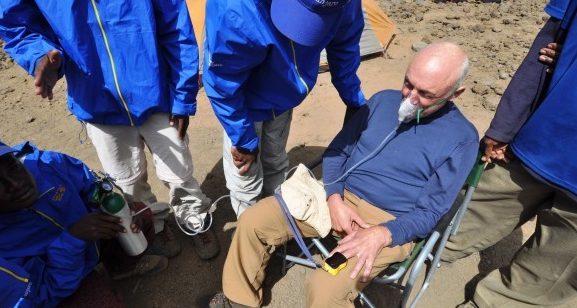
In emergency situations, such as severe Acute Mountain Sickness (AMS), oxygen masks may be administered to alleviate symptoms and facilitate a safe descent to lower altitudes. For conditions like High Altitude Cerebral Edema (HACE) or High Altitude Pulmonary Edema (HAPE), quick descent is crucial. While oxygen can provide temporary relief, either avoiding higher altitudes or descending is the safest approach for those experiencing symptoms.
An exception applies when climbers tackle the Western Breach route, where descent is challenging and stretcher evacuation isn’t feasible. In such cases, oxygen (and/or dexamethasone) might be provided to assist climbers in ascending to the crater rim, followed by a swift descent via Stella Point.
While Everest climbers use oxygen in the “death zone” above 26,000 ft, this practice isn’t suitable for Kilimanjaro. Using oxygen on Kilimanjaro might mask altitude sickness symptoms and disrupt natural adaptation. Acclimatization on Kilimanjaro occurs gradually and requires a slow ascent, staying hydrated, and considering longer routes for better acclimatization protocols.
When approaching Kilimanjaro, it’s vital to prioritize safety and the genuine accomplishment of reaching its summit. Rather than relying on supplemental oxygen, focus on acclimatization techniques, consulting with medical professionals, and ensuring optimal physical condition to truly embrace the journey.
If you liked our post Kilimanjaro: Do I Need Supplemental Oxygen to Climb?, you might also like to read our Altitude Sickness and Acclimatization on Kilimanjaro

If you’re dreaming of climbing Kilimanjaro, the question of how long the journey takes is likely on your mind. The duration of your climb depends on various factors, but let’s break it down to help you plan your ascent effectively.
The time it takes to climb Mount Kilimanjaro varies based on the route you choose and your acclimatization process. On the longer routes, the journey to the summit, Uhuru Peak, and the descent to the finishing point can span from five to nine days. Spending more days on the mountain enhances your chances of summiting successfully and reduces fatigue.
It’s important to note that trekkers who opt for a shorter 5-day climb tend to have the lowest success rate, while those who allocate 8 or 9 days have significantly higher odds of reaching the Roof of Africa.
Selecting a longer route provides the essential advantage of proper acclimatization, increasing your summit success rate. It also reduces the risk of fatigue and injuries. Longer treks like Lemosho, Machame, Rongai, or Northern Circuit allow your body to adjust gradually, enhancing your enjoyment of the journey and safety.
It’s worth noting that elite athletes have set impressive records for summiting Mount Kilimanjaro. For instance, Karl Egloff from Switzerland holds the record at 4 hours and 56 minutes. Therefore showcasing what remarkable feat elite climbers can achieve!
In conclusion, while it’s possible to complete Kilimanjaro’s ascent in 5 or 6 days, choosing a longer route enhances your safety and chances of success. Carefully considering factors like acclimatization, physical fitness, and route choice will help you make an informed decision and fully embrace this extraordinary adventure.
If you liked our blog post Climbing Kilimanjaro: Understanding Timeframes and Routes, you might also like to read Kilimanjaro: Do I Need Supplemental Oxygen to Climb?.

When embarking on a journey to Tanzania, safeguarding your health is of paramount importance. Here’s an informative guide on the Health Measures & Necessary Vaccinations to take for a safe and enjoyable trip to Tanzania.
Before traveling to East Africa, it’s crucial to understand the recommended vaccines and preventive measures. To determine which vaccinations are essential for your trip, consult a healthcare provider who can assess your travel plans and personal health.
Malaria poses a serious risk in East Africa. Protect yourself by seeking prescription antimalarial drugs from your healthcare provider. Choose from options like atovaquone/proguanil, doxycycline, mefloquine, or primaquine under special circumstances.
For entry into Tanzania from countries with yellow fever presence, such as Kenya, a yellow fever vaccination certificate is mandatory.
Guard against food and waterborne diseases by ensuring the safety of your food and drinking water. These illnesses, stemming from viruses, bacteria, or parasites, are a primary cause of traveler discomfort. Safeguard against infections such as E. coli, Salmonella, cholera, and typhoid fever.
As of September 15, 2022, air travelers to Tanzania are exempt from vaccination and testing requirements for COVID-19. However, land border crossings necessitate specific measures:
Though you might have heard about Ebola outbreaks in Africa, the risk of exposure to Ebola while in Tanzania is currently zero. Previous outbreaks were distant and isolated, occurring in West Africa. The virus transmits through direct contact with infected body fluids, posing minimal risk to tourists.
Prioritizing your health is crucial while preparing for a Tanzanian adventure. By following recommended vaccinations, antimalarial medications, and preventive measures against diseases, you can fully enjoy your journey while staying safe and well.
If you liked our blog post Vaccinations and Health Measures for Tanzania Travel, you might also like to read Climbing Mount Kilimanjaro: Understanding Timeframes and Routes.